
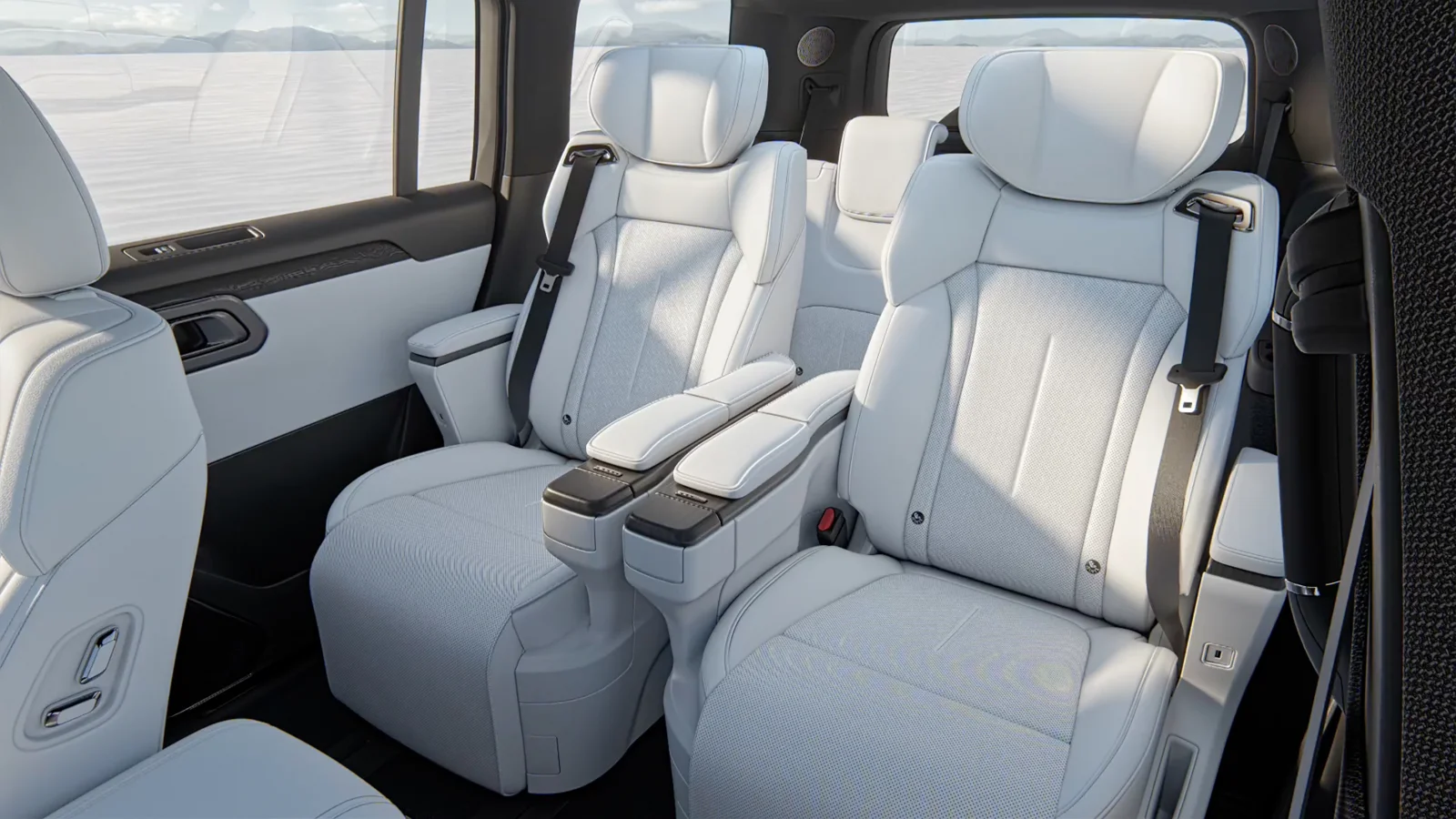
Set the passenger requirement first
The ROX 01 China configuration lists six seats in a 2-2-2 layout and seven seats in a 2-2-3 layout. Both have two seats in the second row; the third row provides the difference in passenger count. Decide how many people normally travel and whether every place is needed on longer journeys. A dealer supplying family buyers may prioritise everyday access differently from a buyer carrying business passengers. Write down the non-negotiable seat count before considering appearance, upholstery or comfort features that may vary with the version.
The Li L9 actual-family-offer comparison holds the same required family and load while useful seat benefits are valued. For a commercial passenger assignment, the client-transfer assignment review fixes the required clients and cases before a comfort package is selected.
Confirm the layout of the candidate
Ask for photographs showing every row and the original seating specification. A close-up of two attractive chairs does not establish the full cabin layout. Match the offered arrangement to the vehicle documents and clarify any reported alterations. The version identification guide explains why a translated trim name or a current brochure cannot replace records for the actual vehicle.
Try access as well as sitting comfort
Have the seller demonstrate access to the rear row, the relevant seat adjustments and the return to normal seating positions. Ask for a continuous video where photographs leave the movement unclear. Consider the intended passengers and their usual entry requirements without assuming that one arrangement suits everyone. Check the operation of fitted comfort features individually and record any feature that is missing or does not work.
The Li L8 application and use comparison retains row access and normal preceding-seat positions in the same required task. For adult third-row use, the third-row adult-use review holds normal settings and separates boarding from seated observations.
The tall-driver and rear-layout review retains rear users behind the normal front position instead of combining incompatible favourable settings. Where personal movement matters, the personal boarding decision treats entry, seated preference and exit as distinct tasks.
Measure luggage in the required layout
Ask for usable luggage measurements with the seats in the positions your customer actually needs. Folded-seat publicity images answer a different question from luggage capacity with a full passenger group. Specify representative suitcase or equipment dimensions and request photographs showing the fit without obstructing occupied seats. Include tailgate access and the space needed to open it where parking arrangements are restrictive.
For airport runs or full-passenger trips, the third-row luggage fit guide turns seat requirements into a practical loading check.
Inspect wear and restraint equipment
On a used candidate, examine seat surfaces, tracks, adjustment controls and the visible condition of belts and buckles. Have a qualified inspector assess any damage or fault indication; photographs alone do not certify occupant protection. For child-seat requirements, consult the correct vehicle manual and the child-seat instructions. Keep the seating review alongside the broader used-vehicle inspection record rather than treating cabin appearance as a complete assessment.
The three-row restraint-and-load decision separates appropriate fitting, personal comfort and required adults under one normal arrangement.
Specify acceptance without assuming upgrades
State the required seat count, essential functions and luggage needs in the enquiry. Ask whether each item is factory fitted, an accessory or an unconfirmed request. Do not assume that changing seats after purchase is an acceptable substitute for sourcing the right original configuration. Use the quotation checklist to keep any included accessories and outstanding seating checks attached to the specific offer.
The comfort-seat premium decision retains neighbouring places and ordinary load instead of treating a relaxation display as a full-family result. The matched or mixed-layout order decision retains individual customer assignments instead of promising interchangeability through a matched-looking group.
Resolve the related acceptance task
After choosing the required seat count, demonstrate the actual comfort equipment and normal adjustment functions on the candidate.
The seat comfort and function inspection helps confirm the equipment offered after the passenger layout has been chosen.
BRING TO YOUR ENQUIRY
Three useful starting points.
- Required seat count and typical passenger group
- Luggage needs with all required seats occupied
- Actual seat functions and configuration evidence
Model references: ROX 01 global model information and ROX 01 China configuration. Published equipment varies by market and version. Verify the offered vehicle separately.